IVR self-service has transformed the way businesses handle customer interactions. Customer service has come a long way from the days when people had to wait endlessly on hold.
Years ago, waiting 15 or even 20 minutes to reach an agent was considered normal. Most customers would rather hang up and take their business elsewhere. Modern consumers expect speed. They expect convenience.
They expect businesses to be available whenever they need help. Research backs this up; more than 60% of customers now prefer to try IVR self-service options before turning to a human agent. This shift is not just about saving time. It is also about control. Customers want to handle issues at their own pace and on their own terms.
In this article, we will explore what self-service really is, how it works, the benefits it offers to both businesses and customers, the technology that powers it, future trends, best practices for implementation, and common misconceptions to avoid. By the end, you will understand why IVR self-service has become a tool for customer support.
What is IVR self-service?
Interactive Voice Response (IVR) self-service is an automated phone system that lets customers interact with a company using either spoken commands or keypad inputs. Instead of waiting for a representative, callers can access the information they need right away. This technology acts as a bridge between customers and businesses.
It delivers fast answers for routine tasks. It reduces pressure on call centres. And it ensures customers feel heard; even when no human is directly involved. Unlike older IVR systems that only routed calls, modern self-service IVR empowers customers to perform real actions such as:
- Checking bank balances.
- Transferring funds.
- Tracking orders and deliveries.
- Paying bills.
- Booking or confirming appointments.
- Resetting passwords or unlocking accounts.
How IVR self-service works
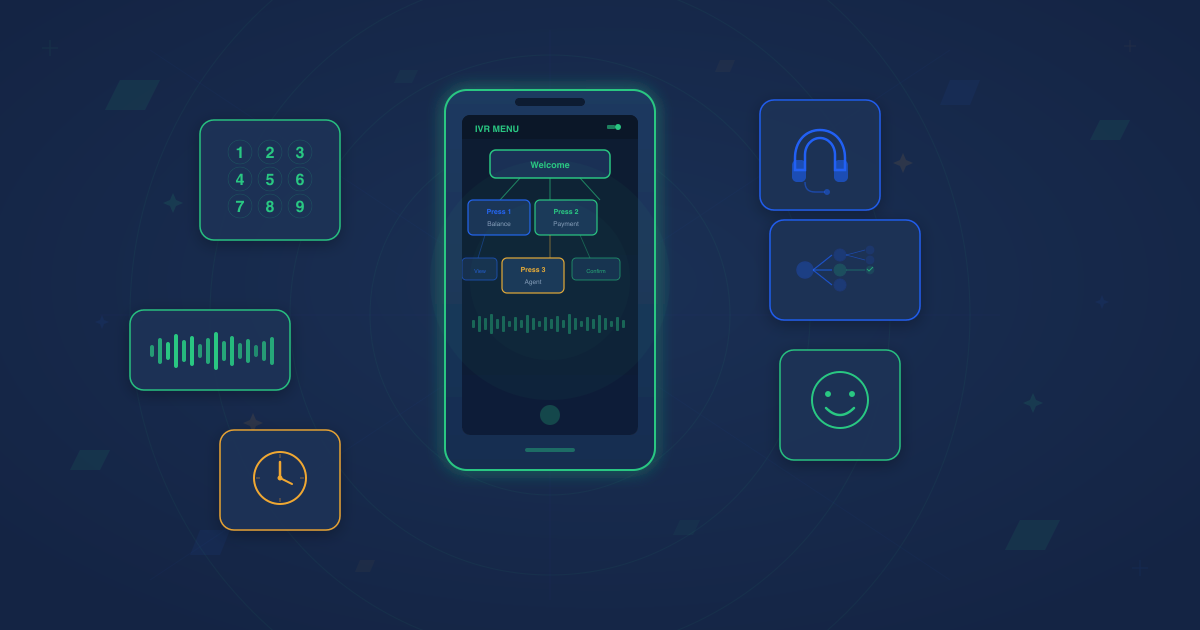
The mechanics of self-service involve a combination of customer input, automated responses, and backend integration. Here’s a simplified breakdown:
- Call initiation: A customer dials the company’s service line.
- System greeting: The IVR system welcomes the caller and provides a menu of options.
- Input stage: The customer either presses a key (DTMF) or speaks commands.
- Processing: The system retrieves or processes the request using databases, CRMs, or integrated apps.
- Resolution or escalation: If the request is resolved, the call ends. If not, the IVR routes the customer to a live agent.
Benefits of IVR self-service for businesses
Businesses that adopt IVR self-service gain several significant advantages:
Reduced call center costs:
Automating everyday tasks, like balance checks, appointment confirmations, or delivery updates, means fewer customers need to speak to an agent.
Fewer calls equal lower staffing costs. It also reduces overtime and burnout among customer service teams. For many companies, this is the single most significant financial benefit.
Better efficiency:
IVR frees up agents to handle situations that actually require a human touch. Instead of spending hours on repetitive questions, they can focus on problem-solving, empathy, and complex cases.
Customers with serious concerns also receive faster, more thoughtful responses. Everyone wins.
Scalability:
Human agents can only take one call at a time. IVR systems can manage thousands. Think of a bank during salary week, a hospital during flu season, or a travel company during peak holidays. Instead of long hold times, customers are served instantly.
Round-the-clock support:
Unlike human teams, IVR does not close at 5 p.m. It works 24/7. Customers can access information at any time, including the middle of the night, weekends, or public holidays.
Actionable insights:
IVR systems collect valuable data. Every choice a caller makes, every request logged, and every service interaction creates patterns.
Businesses can study these patterns to understand what customers really need. For example, if thousands of people keep asking for delivery updates, it may be time to improve logistics.
If most calls happen after 6 p.m., it shows when customers want more access. These insights help companies refine products, services, and overall customer strategy. For many companies, IVR is not just a support tool but also a strategic cost-saving investment.
Benefits of IVR self-service for customers
From the customer’s perspective, the advantages are equally clear:
Instant service:
No more waiting in long queues. Help comes immediately. The system responds within seconds. This saves time and reduces stress.
Convenience:
Customers can get help anytime. Day or night. From anywhere. No need to depend on office hours. Support is always open.
Privacy and control:
Sensitive matters, such as banking or health, can be handled quietly. No need to share details with a stranger. Customers feel safe. They manage their information directly.
Consistency:
Automated systems don’t forget. The answers are always the same. No mood swings. No mistakes caused by stress.
Satisfaction:
Customers feel in control. They don’t have to explain themselves repeatedly. Quick results make them happier. And loyal customers often return.
When customers feel empowered, they are more likely to trust and stay loyal to a brand.
Common use cases of IVR self-service
IVR self-service is used across many industries. A few common examples include:
- Banking and finance: Balance checks, loan information, card blocking, transaction alerts.
- Healthcare: Appointment scheduling, lab results, prescription refills.
- Retail and E-commerce: Delivery tracking, returns, and order confirmations.
- Telecommunications: Bill payments, SIM activation, and troubleshooting steps.
- Government services: Tax inquiries, license renewals, public service hotlines.
The technology behind IVR self-service
Several interlinked technologies power modern IVR self-service:
- DTMF (Dual Tone Multi-Frequency): The traditional system where customers press numbers on their phone keypad. It is simple, reliable, and still widely used.
- Speech recognition: Advanced systems allow customers to speak naturally instead of pressing keys.
- Natural Language Processing (NLP) helps the system understand intent even with variations in phrasing.
- Artificial intelligence (AI): AI takes IVR beyond simple automation. It enables personalization (e.g., greeting customers by name), predictive responses, and continuous learning from past interactions.
- System integration: IVR systems are connected with CRMs, ERPs, and databases.
Future trends in IVR self-service
As technology advances, IVR self-service continues to evolve. Some of the biggest trends shaping the future include:
- Chatbot and IVR integration: Customers will enjoy seamless support as phone systems connect with web and app chatbots.
- Voice Biometrics: Security will improve as systems verify callers using unique voiceprints rather than PINs.
- Predictive assistance: IVR systems will anticipate needs based on recent activity; for example, “Are you calling about your recent delivery?”
- Multilingual and dialect support: With AI-powered language models, IVR will better understand multiple languages and accents.
- Omnichannel support: IVR will not operate in isolation; it will sync with email, apps, and SMS for a unified service.
Best practices of IVR self-service for implementation
To design an effective IVR self-service system, businesses should follow these best practices:
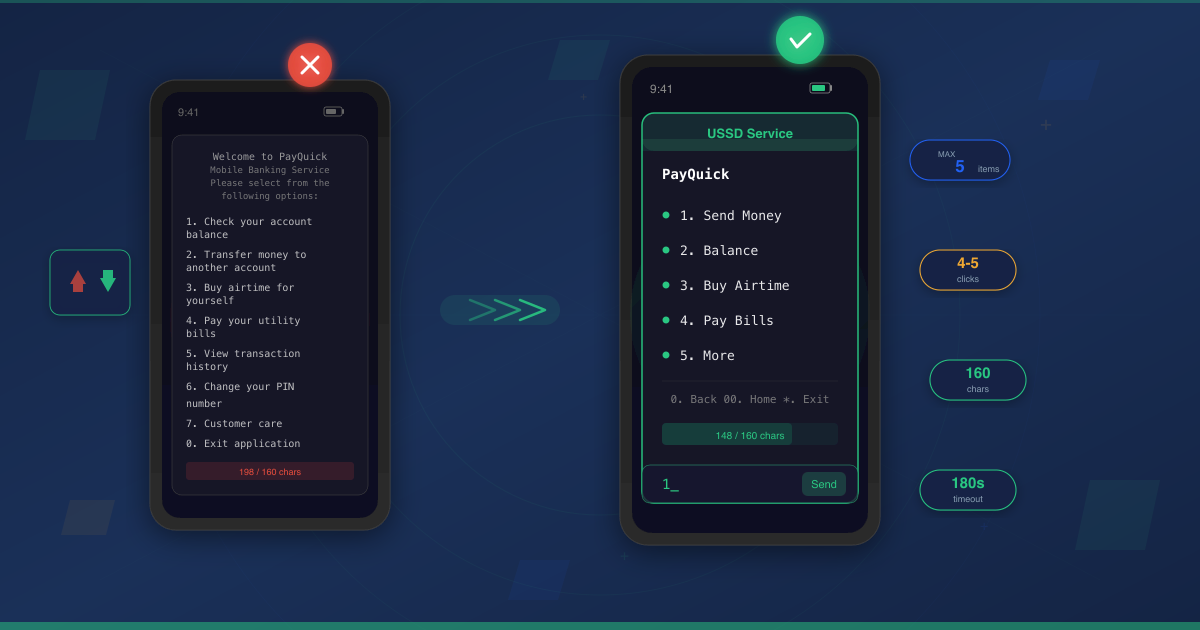
- Keep Menus Simple: Limit each level to three to five options to avoid confusion.
- Use clear and natural language: Avoid jargon; instructions should be brief and intuitive.
- Provide a human escape: Always give customers the option to speak with a live agent.
- Personalize the experience: Use caller ID or account information to offer relevant options.
- Test regularly: gather customer feedback and adjust menus to improve flow.
- Ensure security: encrypt sensitive data and comply with applicable compliance standards.
- Design for accessibility: Ensure the system is accessible for customers with speech or hearing difficulties.
- Monitor performance metrics: Track call completion rates, drop-offs, and satisfaction scores.
Case Studies: IVR Self-Service in Action
Banking example: A regional bank introduced self-service for account inquiries and transfers. Within six months:
- 70% of inquiries were resolved without agents.
- Average call wait times dropped from 10 minutes to 2 minutes.
- Customer satisfaction scores rose by 18%.
Healthcare example: During the COVID-19 pandemic, a hospital used IVR self-service for scheduling and result notifications. The system:
- Handled over 50,000 calls per month.
- Reduced patient wait times dramatically.
- Freed up staff to focus on urgent cases.
Retail example: An online retailer launched IVR self-service for order tracking and returns. Results included:
- 40% fewer calls handled by live agents.
- Faster resolution of return requests.
- Improved repeat purchase rates due to smoother service.
Why businesses should invest in IVR self-service
IVR self-service is no longer optional; it has become a critical tool in delivering efficient and satisfying customer experiences. For businesses, it reduces costs, scales service, and frees agents to focus on complex issues.
For customers, it means instant, convenient, and private access to the services they need. As AI, voice biometrics, and predictive analytics evolve, IVR self-service will become even more powerful.
Companies that adopt it now will not only meet current customer expectations but also position themselves for the future. The message is clear: businesses that invest in well-designed IVR self-service systems will build stronger customer relationships, improve efficiency, and secure long-term growth.