IVR in customer service is the backbone of every successful business. As companies grow, handling an increasing number of customer queries efficiently becomes crucial.
Interactive Voice Response (IVR) systems help businesses streamline communication by automatically directing callers to the right departments or solutions without human intervention.
This not only saves time and reduces operational costs but also enhances customer satisfaction by providing quick, accurate responses around the clock. According to Forbes, 85% of customers are willing to go out of their way to do business with a company that provides better service.
In this article, we will explore what IVR is in customer service, how it works, its benefits, challenges, best practices, and how businesses can leverage it to improve customer satisfaction.
Understanding IVR in customer service
IVR stands for Interactive Voice Response, a technology that allows customers to interact with a company’s system via voice or keypad inputs over the phone.
Instead of waiting to speak to a human agent, customers can navigate a series of automated menus to get information, resolve issues, or connect with the right department.
IVR in customer service serves as the first point of contact. It can handle routine tasks like checking account balances, order status, booking appointments, or paying bills, freeing human agents to focus on more complex issues.
Think of IVR as a virtual receptionist available 24/7, guiding callers, improving efficiency, and reducing wait times.
How IVR in customer service works
The working of an IVR system is surprisingly simple yet powerful. Here’s a step-by-step overview:
- Customer call initiation: A customer calls a company’s support number.
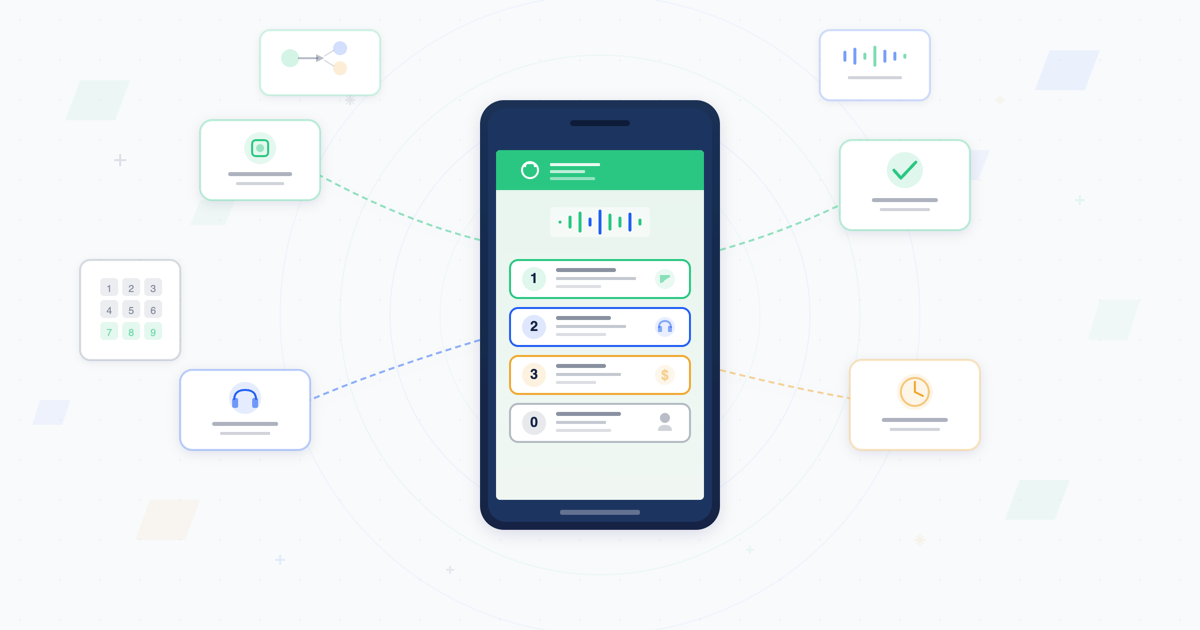
- Automated greeting: The IVR system greets the customer and presents a menu of options, such as “Press 1 for Billing, Press 2 for Technical Support.”
- Input recognition: The system captures the customer’s response via keypad (DTMF tones) or voice commands.
- Routing or automation: Depending on the input, the IVR either routes the customer to a specific department or provides automated responses.
- Resolution or escalation: If the issue cannot be resolved through automation, the customer is connected to a live agent.
Types of IVR systems in customer service
Businesses can implement different types of IVR systems depending on their needs:
Inbound IVR:
Handles incoming calls from customers. The most common type of customer service involves helping customers route queries and providing information.
Outbound IVR:
Used to make automated calls to customers. Examples include reminders, surveys, promotional messages, or notifications about order status.
Hosted IVR:
A cloud-based solution where the IVR is managed by a service provider. It reduces the need for in-house infrastructure.
On-premise IVR:
The system is installed and managed on the company’s servers. It provides greater control but requires more resources.
Speech-enabled IVR:
Allows customers to interact using natural language, making navigation more intuitive and reducing frustration with keypad-based menus.
Key benefits of IVR in customer service
Implementing IVR in customer service brings multiple benefits for both businesses and customers.
Here’s why IVR is so widely used:
- Reduces operational costs: IVR systems handle routine queries automatically, reducing the need for a large team of support agents.
- Increases efficiency: IVR routes calls to the right departments without human intervention, improving response times and reducing misrouted calls.
- Enhances customer experience: IVR allows customers to resolve issues quickly without waiting in long queues.
- Available 24/7: Unlike human agents, IVR systems are always available, allowing businesses to provide consistent service outside regular business hours.
- Scalable solution: As businesses grow, IVR systems can handle a higher volume of calls without requiring additional staff.
Common uses of IVR in customer service
Some common uses include:
- Billing and account management: Customers can check account balances, pay bills, or update personal information.
- Order tracking: Provides real-time updates on orders, shipments, or delivery schedules.
- Appointment scheduling: Automates appointment booking and rescheduling.
- Customer surveys: Collect feedback after a service interaction.
- Technical support triage: Directs callers to appropriate technical support resources or troubleshooting guides.
Challenges of IVR in customer service
While IVR has many benefits, businesses should address certain challenges to ensure it enhances the customer experience rather than causing frustration.
- Complex menu structures: Overly complicated menus can confuse customers. Multiple layers of options may increase call times rather than reduce them.
- Poor voice recognition: Inaccurate speech recognition can misinterpret customer inputs, leading to frustration and repeated attempts.
- Limited personalization: Generic IVR systems that fail to recognize returning customers or their preferences can feel impersonal.
- Customer frustration: If callers are unable to reach a live agent easily, IVR can become a source of annoyance rather than a helpful tool.
- Maintenance costs: On-premise IVR systems require regular updates and maintenance, which can be expensive.
Best practices for IVR in customer service
To maximize the effectiveness of IVR, businesses should follow these best practices:
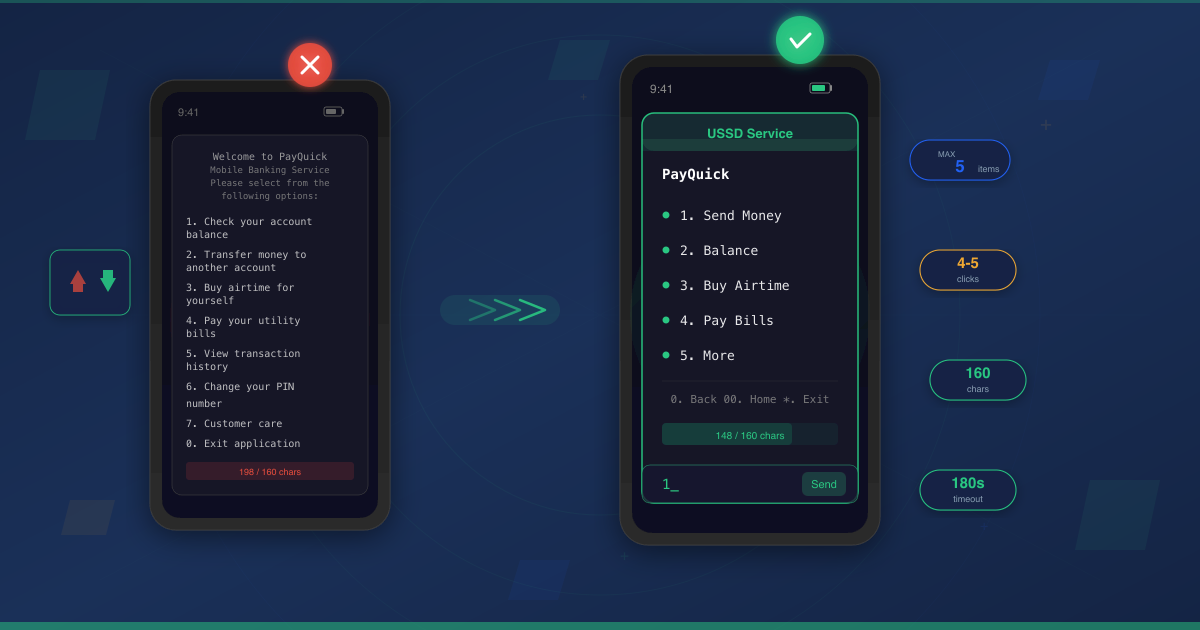
- Keep menus simple: Avoid too many layers and confusing options. Ideally, menus should be limited to 3–5 choices. Example: “Press 1 for Billing, Press 2 for Technical Support, Press 3 for Other Inquiries.”
- Use natural language: Implement a speech-enabled IVR that allows customers to speak naturally rather than relying solely on keypad inputs.
- Offer an easy escape: Always provide an option to speak with a live agent.
- Customers should feel they have control over their experience.
- Personalize the experience: Integrate IVR with CRM systems to recognize returning customers and provide customized prompts.
- Regularly update content: Ensure menus and prompts are up to date, reflecting current services, promotions, and policy changes.
- Monitor analytics: Track call metrics like drop-off rates, average handling time, and self-service success rates to continuously improve the IVR system.
- Test for accessibility: Ensure IVR is accessible for all users, including those with disabilities, and supports multiple languages if necessary.
IVR trends transforming customer service
The world of IVR is evolving rapidly with the integration of AI and machine learning.
Some trends shaping the future of IVR in customer service include:
- AI-powered virtual assistants: AI IVR systems can handle more complex inquiries, understand context, and offer human-like interactions.
- Omnichannel integration: Modern IVR solutions integrate with chatbots, email, and messaging apps, enabling seamless customer service across multiple channels.
- Predictive routing: IVR systems can predict the caller’s needs based on past interactions and direct them to the best-suited agent or department.
- Real-time analytics: Advanced analytics tracks caller behaviour in real-time, helping businesses proactively address bottlenecks.
- Voice biometrics: For security, IVR systems can authenticate callers using their voice, reducing fraud and enhancing trust.
Measuring IVR success in customer service
To ensure IVR is delivering value, businesses need to track key performance indicators (KPIs):
- Call containment rate: Percentage of calls resolved through IVR without agent intervention.
- Average handling time (AHT): How long it takes for the IVR to resolve queries.
- Customer satisfaction score (CSAT): Feedback collected post-interaction.
- Call abandonment rate: The percentage of callers who hang up before completing their IVR journey.
- First call resolution (FCR): Calls resolved on the first attempt without follow-ups.
Real-world examples of IVR in customer service
- Banking sector: Many banks use IVR for balance inquiries, fund transfers, and transaction history.
- E-commerce platforms: E-commerce companies use IVR to provide order status, delivery updates, and return processing, enhancing customer convenience.
- Telecommunications: Telecom companies handle massive call volumes through IVR for bill payments, SIM activations, and technical troubleshooting.
- Healthcare: Hospitals and clinics use IVR to schedule appointments, send reminders, and share test results without staff intervention.
How to choose the right IVR system
When selecting an IVR solution, consider the following:
- Scalability: Can the system handle increased call volumes as your business grows?
- Integration: Does it integrate with your CRM, ticketing, or other customer service tools?
- Flexibility: Can you easily update menus, prompts, and workflows?
- Speech recognition: Does it support natural language processing?
- Reporting and analytics: Are there tools to monitor performance and gather insights?
- Cost: Consider setup, maintenance, and licensing fees. Cloud-based IVR is often more cost-effective for small businesses.
Common mistakes to avoid in IVR implementation
Common mistakes to avoid in IVR implementation include:
- Overloading menus: Avoid giving too many options; it confuses callers.
- Ignoring user feedback: Regularly collect feedback to improve the IVR experience.
- Neglecting human touch: Always allow callers to reach a live agent.
- Poor voice quality: Use professional voice prompts; robotic voices can be frustrating.
- Not testing: Continuously test your IVR to identify pain points and technical issues.
The future of IVR in customer service
The future of IVR lies in automation, AI, and customer personalization. As technologies like AI and machine learning mature, IVR systems will become smarter, capable of understanding natural conversations, predicting customer needs, and providing proactive solutions.
Voice biometrics and omnichannel integration will further strengthen security and service consistency.
Businesses that adopt next-generation IVR systems can reduce costs, improve customer experience, and gain a competitive edge in today’s fast-paced market.
Maximizing the impact of IVR in customer service
IVR plays a key role in modern customer service by streamlining call handling, providing instant information, and ensuring customers are quickly directed to the right support.
It reduces costs, improves efficiency, and can even enhance the customer experience when designed thoughtfully.
The real value of IVR comes from combining automation with personalization; keeping menus simple, offering options to reach live agents, and using data to improve the system continuously.
Businesses that embrace IVR strategically can not only handle higher call volumes effectively but also build stronger, more satisfying relationships with their customers.