Among the many tools available, One-Time Passwords (OTP) stand out as one of the most practical and widely adopted layers of defence against cyber threats.
But what makes OTP so important? And how does understanding how they work strengthen digital security? To answer these questions, this article provides a comprehensive examination of OTP, its role in modern authentication, real-world use cases, associated risks, and best practices for both businesses and users.
What is an OTP?
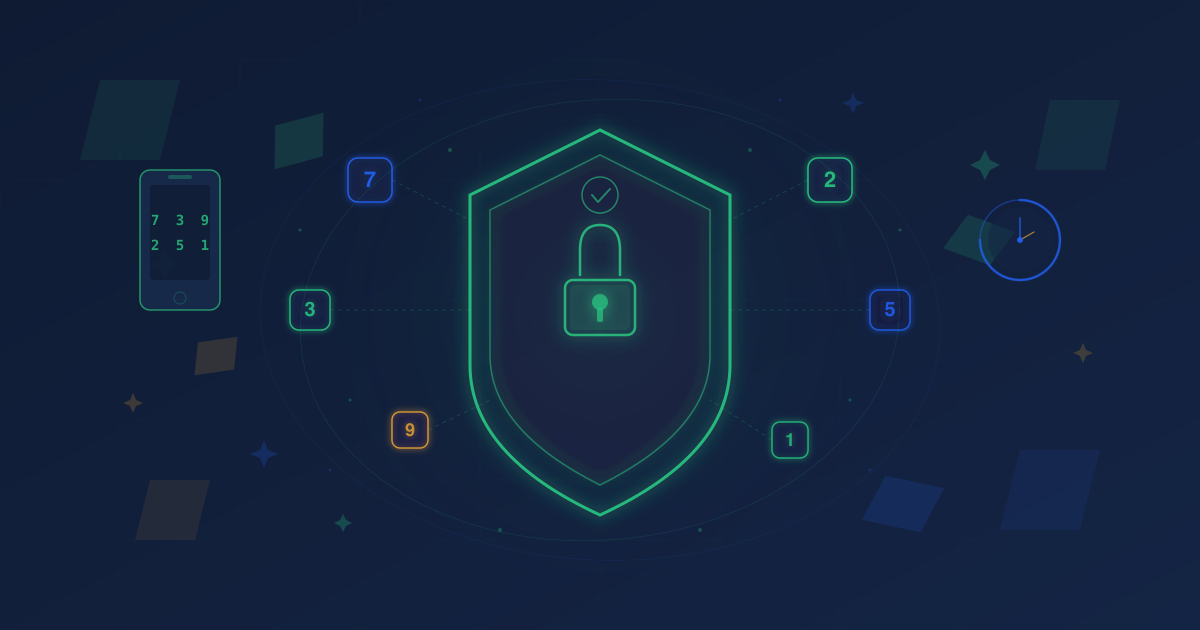
An OTP (One-Time Password) is a unique, temporary code that serves as a second layer of authentication when accessing digital platforms.
Unlike static passwords that remain the same until changed, OTPs are valid for only a short time, typically 30 to 60 seconds or for a single transaction.
They can be delivered through several channels:
- SMS (sent to the user’s phone)
- Mobile authenticator apps (like Google Authenticator or Microsoft Authenticator)
- Hardware tokens (such as RSA SecurID)
How understanding OTP strengthens digital security
Understanding how OTPs work helps businesses and users appreciate their role in digital security. It builds awareness about risks, ensures correct usage, and encourages the adoption of best practices.
OTPs are not just a tech feature; they are a critical line of defence in protecting personal and organizational data. Passwords alone are not enough anymore. Studies show that:
- Over 80% of hacking-related breaches involve stolen or weak passwords.
- Users tend to reuse passwords across multiple platforms, multiplying risk.
- Phishing and keylogging attacks have made password-only systems unreliable.
OTPs mitigate these risks by acting as an additional proof of identity. Even if a hacker manages to steal your password, they won’t be able to access your account without the OTP, which they likely cannot generate or intercept in time.
How OTP works
To understand how OTPs contribute to digital security, it is helpful to examine the technology behind them. OTP generation is typically based on two methods:
1. Time-based OTP (TOTP)
- Codes are generated based on the current time and a shared secret key between the server and the user’s device.
- Valid only for a short window (e.g., 30 seconds).
- Used by most mobile authenticator apps.
2. HMAC-based OTP (HOTP)
- Codes are generated using a counter that increments every time an OTP is requested.
- Each OTP is valid until used.
- Common in hardware tokens.
Both methods ensure that the code is unique, unpredictable, and resistant to hacking attempts.
Real-world applications of OTPs
Some real-world applications of OTP include:
1. Banking and financial services
Banks rely heavily on OTP for online transactions. For example, when you initiate a money transfer, the system sends an OTP to your registered phone number. Without entering it, the transaction won’t go through.
Real-world applications of OTPs in banking include securing online transfers, ATM withdrawals, and mobile banking logins.
2. E-commerce transactions
Platforms like Amazon or Jumia often require OTP during checkout for card payments. Real-world applications of OTPs in e-commerce include validating online purchases, preventing payment fraud, and verifying delivery confirmations.
3. Corporate systems
Businesses use OTP to secure employee logins to sensitive systems, particularly as remote work becomes increasingly prevalent.
For instance, an employee accessing a company’s internal database may need both their password and an OTP from an authenticator app.
Real-world applications of OTPs in corporate systems include protecting remote logins, cloud applications, and internal databases.
4. Government services
Many e-governance platforms, ranging from tax filing portals to ID verification systems, rely on OTPs to securely validate citizens’ access.
Real-world applications of OTPs in government services include online tax filing, voter registration, and national ID verification.
Limitations of OTP
While OTP are strong, they are not foolproof. Understanding their weaknesses is just as important as appreciating their benefits.
- SIM swap attacks: Hackers can trick telecom providers into issuing a new SIM card linked to your phone number. Once they gain control, every OTP sent via SMS will be delivered to their device instead of yours.
- Phishing attacks: Attackers may create convincing fake websites or apps that closely resemble legitimate services. Users are then asked to enter both their password and OTP, which the attacker captures in real-time. With this information, the hacker can immediately log into the actual service before the OTP expires. This type of attack is particularly dangerous because it exploits trust and urgency, causing users to become less cautious.
- Man-in-the-middle attacks: If a hacker intercepts communication between a user and a service, such as through insecure Wi-Fi networks or compromised devices, they can capture OTPs during transmission. Even though OTPs expire quickly, in the hands of a hacker who is already monitoring the connection, they can be used instantly to gain unauthorized access.
- User fatigue: While OTPs enhance security, too many prompts can overwhelm users. Constantly being asked to verify with a new code may feel inconvenient, leading people to turn off the feature if possible or seek shortcuts. In some cases, this frustration causes users to adopt unsafe practices, such as reusing OTPs, storing them insecurely, or preferring weaker but faster login methods.
Best practices for using OTPs
Best practices for using OTP for businesses and users include:
For businesses
- Diversify OTP delivery: Relying solely on SMS for OTPs can expose users to SIM swap attacks and interception. Businesses should consider multi-channel OTP delivery, such as authenticator apps (Google Authenticator, Authy), email-based OTPs, or push notifications through mobile apps.
- Educate users: Many security breaches happen because end-users are unaware of phishing tactics. Businesses must provide clear guidelines and reminders that legitimate staff will never request OTPs over calls, texts, or emails. Educational prompts in apps, websites, or even monthly newsletters can empower users to act cautiously.
- Limit retry attempts: OTP systems should have strict retry limits. For instance, if a user enters the wrong OTP more than three times, the account should be temporarily locked or additional verification required.
- Encrypt communication channels: OTPs should always travel over encrypted channels (such as HTTPS and TLS). Without encryption, attackers can intercept OTPs in transit. Businesses should also avoid storing OTPs in plain text within their systems. Instead, OTPs should be hashed and expire quickly.
- Implement adaptive authentication: Businesses should adopt risk-based authentication to enhance security. For example, if a user logs in from a new device or location, additional verification (such as a push notification confirmation) can be required.
- Use short expiry windows: OTPs should expire quickly, ideally within 30–60 seconds. Long validity periods give attackers more time to exploit stolen OTPs. Short windows reduce the attack surface and force real-time authentication.
For users
- Avoid SMS-only OTPs: Users should enable stronger forms of authentication, such as app-based OTPs or hardware security keys (e.g., YubiKey, Titan Key). These are less vulnerable to SIM swap scams or message interception.
- Never Share OTPs: No legitimate bank, service provider, or support agent will ever ask for your OTP. Sharing an OTP even once can give an attacker immediate access to sensitive accounts. Always treat OTPs like confidential passwords.
- Secure your SIM card: SIM swap fraud is on the rise. Users should set a SIM card PIN so that if the SIM is removed, it cannot be used elsewhere. Additionally, if a mobile carrier requests personal details for “SIM upgrades” or “line security,” verify the request through official customer service before responding.
- Update regularly: Ensure that authenticator apps, mobile operating systems, and web browsers are always kept up to date. Updates often fix critical vulnerabilities that attackers exploit. Failing to update leaves users exposed, even if they follow other best practices.
- Enable multi-factor authentication (MFA): OTPs should not be used alone if stronger MFA options are available. Users should combine OTPs with biometrics (fingerprint, face ID) or hardware keys for maximum account protection.
- Be alert to unusual activity: If you receive an OTP you did not request, it could mean someone is trying to access your account. In such cases, do not ignore the alert; immediately change your password and notify your service provider.
The future of OTPs
While OTPs remain a cornerstone of digital security, newer technologies are emerging:
- Biometrics (fingerprints, facial recognition) add convenience and security.
- Behavioral analytics track how a user types, swipes, or moves their device to detect anomalies.
- Passwordless authentication is gaining traction, combining biometrics and device-based verification.
Still, OTPs are likely to remain relevant for years to come because of their simplicity, cost-effectiveness, and global adoption.
Building stronger digital security with OTP
In an era of increasing cyber threats, understanding OTPs is crucial for digital security. OTPs provide an additional layer of protection against password-related breaches, phishing, and unauthorized transactions.
While they are not flawless, combining them with other security measures such as encryption, biometrics, and user education makes them far more effective.
For businesses, OTPs build customer trust and protect assets. For individuals, they offer peace of mind and stronger control over personal data.
As digital interactions continue to grow, the ability to understand and correctly use OTPs will remain a key factor in safeguarding the digital world.