
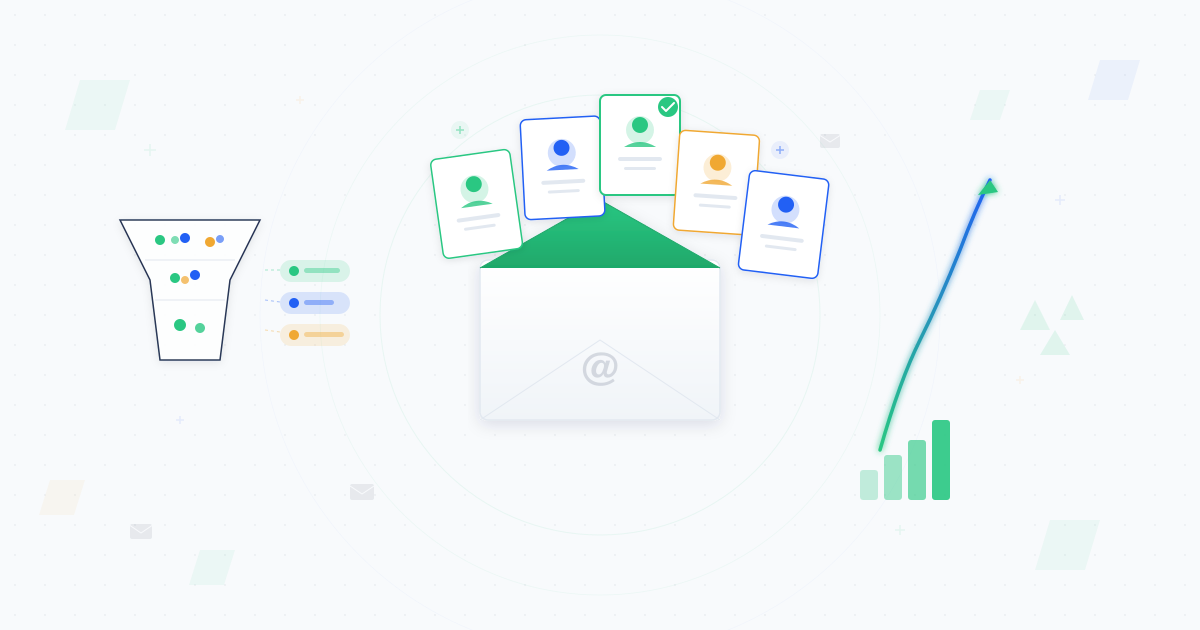
Email marketing remains one of the most effective digital marketing strategies.
Despite the rise of social media and other platforms, email remains the most effective channel for delivering an unmatched return on investment (ROI).
However, the success of your email campaigns depends heavily on how well you manage your email list.
Email marketing list management is not just about collecting email addresses; it is also about maintaining and updating them.
It involves building a quality list, organizing it strategically, maintaining it regularly, and nurturing subscribers to keep them engaged.
In this article, we will break down everything you need to know, from building your list the right way to segmenting and cleaning it for better results.
What is email marketing list management?
Email marketing list management refers to the process of collecting, organizing, maintaining, and optimizing your list of email subscribers.
A well-managed list ensures that your emails reach the right people, improve engagement rates, and reduce spam complaints or unsubscribes.
It is not just about growing an extensive list; it’s about building a healthy, responsive, and well-targeted list that aligns with your business goals.
Key features of email list management
The key features of email list management include:
1. Opt-in and subscription forms:
Tools that allow users to sign up voluntarily, often customizable and embeddable on websites or landing pages.
2. Segmentation:
The ability to categorize your list based on subscriber data, such as location, interests, behavior, or signup source.
3. Tagging and custom fields:
You can assign tags or create custom data fields for more detailed organization and personalization.
4. Automation:
Triggers and workflows that automatically send emails based on subscriber actions (e.g., welcome emails, birthday messages, cart abandonment).
5. List cleaning tools:
Features to identify and remove bounced emails, inactive users, and duplicates to keep your list healthy.
6. Analytics and reporting:
Insights into open rates, click-through rates, bounces, unsubscribes, and other engagement metrics.
7. Compliance tools:
Built-in options to help with legal compliance (e.g., unsubscribe links, data privacy notices, consent checkboxes).
8. Integration capabilities:
Ability to connect with CRM systems, landing pages, e-commerce platforms, and SMS tools like Arkesel.
Key benefits of email list management
Here are the key benefits of email list management:
1. Higher deliverability rates: A clean and engaged list means fewer bounced emails and spam complaints.
2. Better engagement: When subscribers receive content they care about, open and click-through rates increase.
3. Improved ROI: Targeted emails yield better conversions.
That means more sales, leads, or signups.
4. Compliance: Effective list management helps you comply with data privacy laws, such as GDPR and CAN-SPAM.
Core steps of effective email marketing list management
The core steps of effective email marketing list management include:
Step 1: Building your email list the right way
List building is the foundation of email marketing.
But how you build your list matters a lot more than how fast you build it.
A. Use opt-in forms
Always use opt-in forms on your website, blog, or landing pages to collect email addresses.
Let people subscribe voluntarily. Some places to add forms include:
- Homepage
- Blog sidebar
- Pop-ups or slide-ins
- Footer
- The checkout page or after purchase
B. Offer an incentive
People love freebies. A good lead magnet can dramatically increase your sign-ups.
Examples include:
- Free eBooks or guides
- Discounts or promo codes
- Checklists or templates
- Webinars or free courses
C. Never buy email lists
Purchased lists are often filled with invalid or unverified email addresses.
They hurt your sender reputation, increase spam complaints, and reduce engagement.
Continually grow your list organically.
It may take more time, but it fosters trust and yields better results.
Step 2: Organizing and segmenting your list
Once you have subscribers, the next step is to organize them.
It helps you send the right message to the right audience.
A. What is segmentation?
Segmentation means dividing your email list into smaller groups based on specific criteria.
This could be based on:
- Demographics (age, gender, location)
- Behavior (purchase history, website activity)
- Sign-up source (where they joined your list)
- Interests (based on clicks or preferences)
B. Why it works
Segmented campaigns perform better than general broadcasts because they feel more personal.
For instance, a customer who has just made a purchase might appreciate a follow-up email with helpful tips, while a new subscriber may need a welcome message.
C. How to segment
Use your email marketing tool (like Mailchimp, ConvertKit, or GetResponse) to:
- Tag subscribers based on actions (clicked a link, downloaded a guide)
- Create groups or segments based on form fields (e.g., job title, location)
- Automatically assign categories based on behavior
Step 3: Keeping your list clean and healthy
List hygiene is about regularly removing inactive or invalid subscribers to keep your list fresh and engaged.
A. Remove inactive subscribers
Every 3 to 6 months, identify subscribers who have not opened or clicked your emails in a while.
Try re-engaging them first with a win-back campaign, and if that fails, remove them.
Inactive emails hurt your sender score and reduce open rates.
B. Use a double opt-in process
Double opt-in means the subscriber confirms their email address by clicking a link after signing up, and it improves email accuracy and ensures they genuinely want to hear from you.
C. Watch for hard bounces
Hard bounces occur when an email is sent to an address that does not exist.
Too many of these can result in being blacklisted.
Your email platform should automatically remove them; however, it is still a good idea to monitor bounce rates.
D. Unsubscribe management
Make it easy for people to unsubscribe.
While it may sound counterintuitive, it is preferable to being marked as spam.
Respecting unsubscribe requests is also a legal requirement in most countries.
Step 4: Nurturing your list
Now that you have a clean and well-organized list, it is time to build relationships with your subscribers.
A. Send a welcome email
The welcome email is the first impression you make. Use it to:
- Thank the subscriber for joining
- Set expectations (how often you will email, what content to expect)
- Provide the lead magnet (if you promised one)
- Invite them to connect with you on social media or visit your blog
B. Provide consistent value
Make your emails valuable. Mix educational, promotional, and personal content so that it doesn’t feel like you are always selling.
Send:
- Helpful tips or tutorials
- Industry news or updates
- Exclusive offers or early access
- Product recommendations or customer stories.
C. Monitor engagement
Track email metrics like open rates, click-through rates (CTR), bounce rates, and unsubscribe rates.
High engagement tells you your emails are relevant.
Low engagement indicates it is time to revise your strategy.
Tools to help you manage your list
Here are a few email marketing tools with strong list management features:
- Mailchimp: Great for beginners, with visual segmentation, tagging, and automation.
- ConvertKit: Ideal for creators. Easy tagging and automation based on behavior.
- ActiveCampaign: Advanced automation, CRM features, and in-depth reporting.
- MailerLite: Affordable with segmentation, automation, and a user-friendly interface.
- GetResponse: Strong for eCommerce and webinars with list scoring and automation.
- Arkesel: Popular in Africa, Arkesel offers easy-to-use email and SMS campaign tools with features like contact segmentation, bulk messaging, detailed analytics, and automation. It is beneficial for businesses reaching customers in Nigeria, Ghana, and other West African countries.
Each tool offers features like:
- List segmentation
- Tags and custom fields
- Email automations
- Reporting dashboards
- Integration with CRMs and websites.
Common mistakes to avoid
The common mistakes include:
1. Neglecting list maintenance: Never ignore inactive subscribers.
Clean your list often to maintain high deliverability.
2. Not segmenting: Sending the same message to everyone reduces engagement.
Always tailor your content to segments.
3. Over-sending or under-sending: Flooding inboxes can annoy subscribers, while long silences can lead to disinterest.
Find a consistent rhythm (weekly or bi-weekly is common).
4. Unclear CTAs: Always have one clear call-to-action in your email, whether it’s to read a blog, buy a product, or reply to you.
5. Ignoring analytics: Your email metrics offer powerful insights.
Use them to refine your subject lines, timing, and content.
Legal and ethical considerations
Email marketing is regulated in many countries.
Laws like GDPR, CAN-SPAM, and Nigeria’s NDPR require transparency and responsibility in how you manage email data.
Here are a few things to keep in mind:
- Always obtain consent: Use opt-in forms and refrain from adding people without their permission.
- Include an unsubscribe link: This is required by law in most countries.
- Disclose your identity: Use a real sender name and include your physical address in emails.
- Respect privacy: Do not share subscriber information or send irrelevant third-party content.
Final thoughts: Build a list that builds your business
Email marketing is most effective when it is personal, relevant, and respectful.
Managing your list effectively helps you maximize the impact of every email you send.
Instead of chasing numbers, focus on quality. Grow your list ethically.
Organize it with a purpose. Clean it regularly. And nurture your subscribers like the real people they are.
That is how you turn a list into a loyal, buying audience.
Key takeaways
Email marketing is not just a task; it is a relationship-building tool.
Manage your list with care, and your email strategy will ultimately reward you.
- Grow your list organically with opt-in forms and lead magnets
- Segment your list to send targeted, personalized emails
- Clean your list regularly by removing inactive or bounced emails
- Use email automation tools to simplify your workflows
- Follow legal guidelines and respect your subscribers’ privacy


