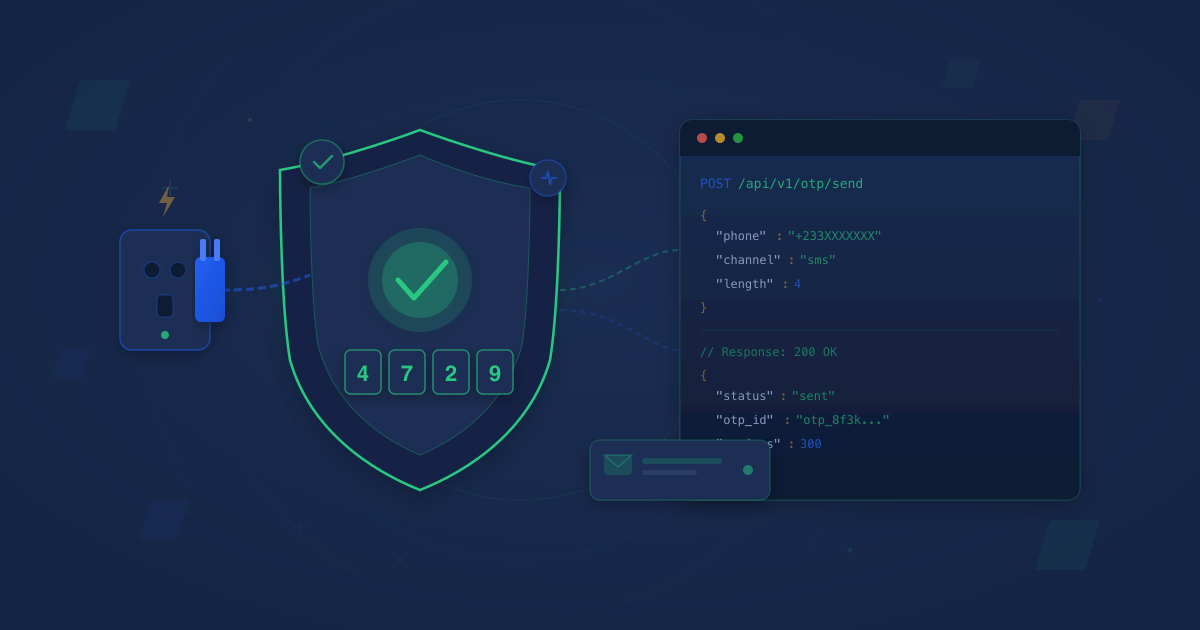
A plug-and-play OTP API helps businesses achieve this by providing a ready-to-use solution for sending one-time passwords through SMS or email.
Verifying users should be quick, secure, and simple.
It eliminates the need to build complex systems from scratch, reducing both cost and friction.
In this article, we will explore seven reasons why a plug-and-play OTP API is a wise investment.
From stronger security to faster onboarding, you will learn how the right tool can enhance the user experience and how Arkesel makes that process even easier.
What is a plug-and-play OTP API?
A plug-and-play OTP API (one-time password application programming interface) is a ready-to-use tool that allows businesses to send and confirm temporary passcodes.
These passcodes can be delivered via text messages, emails, or in-app notifications.
Instead of building a verification system from scratch, companies can use this interface to integrate secure user authentication quickly and easily across websites and mobile applications.
Unlike traditional systems that require complex server setup and telecom configurations, a plug-and-play option supports rapid deployment.
Why you should be using a plug-and-play OTP API
Plug-and-play OTP APIs are a strategic asset.
If your application requires authentication, these ready-to-integrate solutions offer serious advantages in speed, scale, and security.
Here is why your team should consider using one.
1. Accelerates product deployment
Plug-and-play OTP APIs reduce the time spent on backend development, allowing engineering teams to focus on shipping core features.
There is no need to reinvent verification logic, build delivery infrastructure, or test SMS reliability from scratch.
With a prebuilt API, your product gets to market faster, with fewer bugs and delays.
2. Enterprise-grade security standards
These APIs are often built with industry-standard encryption, token validation, rate limiting, and fraud prevention baked in.
Instead of building a security framework from scratch, you gain access to a battle-tested system that is regularly updated and audited.
That means fewer vulnerabilities and more trust, both from regulators and users.
3. Flexible scalability without rework
A well-built OTP API can handle authentication needs, whether you are onboarding 1,000 or 1 million users.
It automatically adjusts to usage spikes during campaigns, launches, or seasonal events, without requiring you to spin up new servers or rewrite your infrastructure.
4. Consistent experience across all platforms
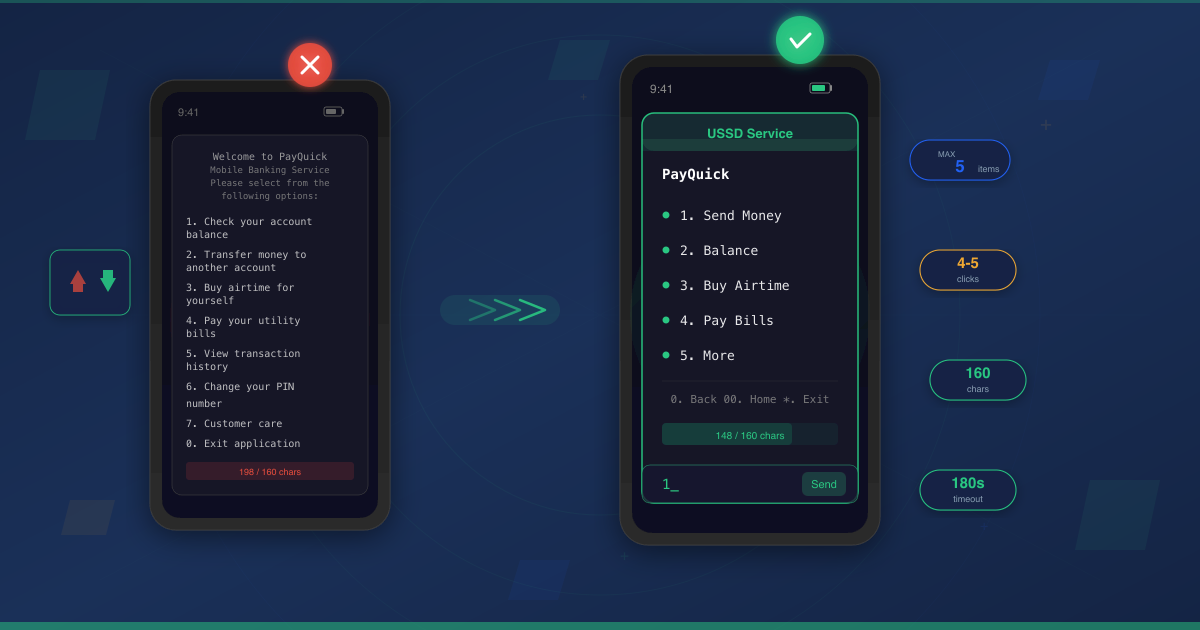
A plug-and-play one-time password API works seamlessly across Android, iOS, web, and USSD platforms.
Users receive the same fast and secure verification experience regardless of where they log in.
Developers do not have to build or maintain different systems for each channel.
This saves time, reduces errors, and speeds up deployment.
A unified experience also builds user trust and strengthens your brand.
5. Frees up internal engineering resources
Authentication may be necessary, but it is rarely your product’s unique selling point.
By letting an API handle OTP logic, your developers spend less time troubleshooting delivery failures or security loopholes.
Instead, they focus on what truly sets your business apart: user experience, platform performance, and unique product value.
6. Higher success rates in OTP delivery
Plug-and-play providers usually partner with trusted telecom aggregators to ensure messages are delivered fast and reliably.
This means fewer failed logins, fewer customer complaints, and less friction during the onboarding process.
A higher OTP success rate directly improves conversion rates and reduces the number of support tickets.
7. Reduces operational costs
When you use a plug-and-play API, you are outsourcing infrastructure, maintenance, uptime monitoring, and compliance updates.
You only pay for what you use, which makes it easier to manage costs as you scale.
For many B2B teams, that translates to predictable budgeting and reduced total cost of ownership over time.
What to look for in a plug-and-play OTP API provider
Choosing the right OTP API provider is a business decision that affects your users’ trust, platform security, and operational efficiency.
These are the non-negotiable qualities to expect from any serious provider.
1. Global and local message delivery
One-time passwords should reach your users on time, every time.
A dependable provider should have strong delivery routes through local Nigerian telecom operators and established global carriers.
Request proof of their delivery success rates, especially during traffic spikes.
2. Real-time, actionable reporting
You need access to clear, real-time delivery insights.
A strong provider will offer dashboards that show delivery status, delays, and the reasons messages fail.
These metrics enable technical teams to detect issues early and provide support teams with the necessary data to resolve problems quickly.
3. Straightforward integration across languages
Developers should not struggle with implementation.
Look for providers that offer well-documented SDKs (Software Development Kits), support for common programming languages, and RESTful API (Representational State Transfer) endpoints.
Integration should be seamless, and the API should work smoothly within your existing DevOps pipeline.
4. Reliable uptime and system redundancy
A provider should guarantee at least 99.9% uptime, backed by a Service Level Agreement.
Downtime damages credibility.
Ask about their backup systems, frequency of failover testing, and how quickly disruptions are resolved.
5. Automatic retry and multi-channel fallback
A failed OTP should trigger automatic retries.
Additionally, the provider should offer fallback options, such as voice calls or email, depending on the urgency and channel availability.
6. Transparent and scalable pricing
There should be no hidden charges.
Look for providers that offer clear per-message pricing, volume-based discounts, and scalable plans that grow with your business.
Billing transparency is crucial for teams managing tight budgets or high volumes of traffic.
7. Strong compliance and data protection
Data security is not negotiable.
The provider must comply with relevant privacy regulations, including Nigeria’s NDPR and global standards like GDPR.
Ensure they offer end-to-end encryption, secure storage, and firm data retention and deletion policies.
Best practices for integrating plug-and-play OTP APIs into your platform
Integrating a plug-and-play OTP API into your system should be seamless, secure, and scalable.
These best practices help you achieve precisely that.
1. Use a secure and scalable API gateway
Ensure your OTP API is integrated via a secure gateway that supports encryption and rate limiting.
This protects sensitive user data and ensures your system can handle high volumes of OTP requests during traffic spikes without compromising performance or reliability.
2. Choose APIs with multi-channel delivery options
A strong OTP provider supports delivery via SMS, voice, and email.
Multi-channel options enhance delivery success rates, particularly in areas with unstable networks or where users prefer different authentication methods.
This also helps in delivering fallback messages when primary channels fail.
3. Ensure compliance with data protection regulations
The OTP API must comply with data protection laws, such as the Nigerian Data Protection Regulation (NDPR) and the GDPR, or any other applicable local regulations.
This means proper user consent, data encryption, and secure data storage should be part of your integration strategy.
4. Enable real-time monitoring and reporting
Your integration should allow real-time tracking of OTP delivery and failure rates.
Access to analytics dashboards enables your technical team to identify issues quickly and optimize delivery logic, thereby minimizing authentication delays and enhancing the user experience.
5. Minimize latency in OTP delivery
Select providers with local infrastructure or edge routing in your region to reduce latency. Delays in OTP delivery can lead to failed logins, user frustration, and security concerns. Test delivery times across locations before fully deploying.
6. Implement auto-expiry and retry logic
Each OTP should expire after a short, fixed period (typically 3–5 minutes) to maintain security.
Your system should automatically retry failed OTP attempts.
But it should do so carefully to avoid overwhelming users or getting flagged by telecom providers.
7. Diversify OTP delivery channels
SMS remains the backbone of OTP delivery, but depending solely on it exposes your system to potential failures.
Network issues, carrier delays, or message blocking can frustrate users and lead to drop-offs.
Strengthen your delivery strategy by adding voice calls, in-app delivery for active users, and push notifications as fallbacks.
This multi-channel approach enhances reliability, ensuring users receive their codes promptly, regardless of the circumstances.
Why a reliable OTP API is essential for your business
One-time passwords still play a central role in digital security.
They verify identities, protect user accounts, and ensure safe transactions.
However, their effectiveness depends entirely on how quickly and reliably they are delivered.
If your OTP API is inconsistent or slow, users will lose trust, and your platform could become vulnerable.
To maintain user confidence and deliver real-time authentication, you need an OTP API that is fast, dependable, and easy to integrate.
Arkesel provides all of this with direct delivery routes, intelligent failover systems, and transparent reporting tools.
If security and user experience matter to your business, Arkesel is the provider you need.