
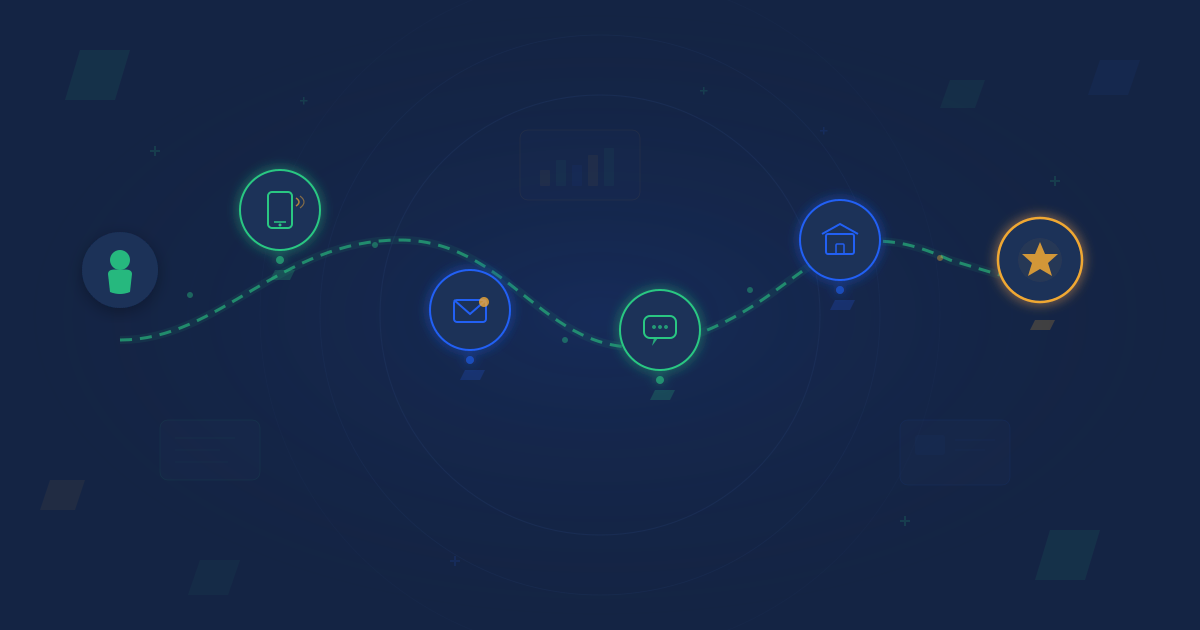
Customer experience is shaped by every interaction a person has with a brand.
These interactions, known as touchpoints, occur throughout the customer journey, from the moment a potential customer first hears about your business to the point they become loyal advocates.
Each of these touchpoints offers a unique opportunity to create a positive impression, build trust, and form lasting relationships.
However, if handled poorly, they can also deter potential customers.
That is why understanding and optimizing these moments is key to building a customer-centric business.
What are customer experience touchpoints?
Customer experience touchpoints are the various points of interaction between a customer and your brand.
These can be direct, such as speaking to a sales representative, or indirect, such as reading an online review.
Some touchpoints are carefully planned, such as a marketing campaign, while others occur organically, like a customer posting about your product on social media.
Touchpoints can be grouped into three stages of the customer journey: pre-purchase, during-purchase, and post-purchase.
Examples of customer experience touchpoints
Let’s look at some real-life examples of touchpoints within each stage of the customer journey:
1. Pre-purchase touchpoints
These are the moments when a potential customer is becoming aware of your brand or considering your offerings:
- Digital ads on platforms like Facebook or Google
- Instagram posts or TikTok videos showcasing your product
- Blog articles that answer a common customer question
- Word-of-mouth referrals from friends or influencers
- Customer reviews on websites or YouTube
- Storefront design that grabs a passerby’s attention
- Free samples or demos at a trade show
2. Purchase touchpoints
This is when the customer decides to make a purchase.
The ease, comfort, and confidence they experience here are critical:
- Website interface and checkout design
- In-store ambiance and how employees greet or assist customers
- Sales calls or consultations
- Clarity of product descriptions
- Payment options and speed
- Return or refund policies are visible before purchase
- Chatbots or live customer service for real-time questions
3. Post-purchase touchpoints
These touchpoints determine whether a customer will return or recommend you to others:
- Order confirmation emails and tracking notifications
- Speed and condition of delivery
- Thank-you notes included in the packaging or via email
- Follow-up emails asking for feedback or offering discounts
- Online communities or help centers for product use
- Customer support for resolving complaints or issues
How to identify customer touchpoints
You cannot improve what you have not identified.
Discovering all the touchpoints a customer experiences is the first step toward optimization.
1. Walk through the customer journey yourself
Put yourself in the customer’s shoes.
Search for your product online, visit your website, ask a question, try to make a purchase, and follow through the process.
Take notes on every interaction and emotion along the way.
2. Talk to your customers
Ask your customers how they found you, what made them decide to buy, and what stood out (good or bad) in their experience.
Conduct interviews or surveys to get first-hand insights.
3. Check digital and physical data
Utilize Google Analytics, heat maps, social media engagement tools, and customer service reports to identify where people are engaging with your brand.
4. Collaborate with frontline teams
Talk to sales, customer support, delivery teams, and store staff.
They interact with customers daily and can highlight frequent questions, pain points, and patterns you may miss.
How and where to begin touchpoint mapping
Touchpoint mapping involves visually representing all the ways customers interact with your brand and how they move through these stages.
This exercise brings clarity and helps you align every part of your business to serve your customers better.
Steps to begin:
1. Define a customer persona. Who are you creating the map for?
A young online shopper will have a different journey from a middle-aged walk-in customer.
2. Identify the stages of the customer journey.
Usually: Awareness, Consideration, Purchase, Retention, and Advocacy.
3. List all the touchpoints.
Start with known channels, such as ads, social media, and customer service, then explore overlooked moments, like product unboxing or abandoned cart emails.
4. Evaluate each touchpoint. What is the customer doing? What are they feeling?
Is the experience helpful or frustrating?
5. Identify gaps and pain points.
For example, if customers frequently leave your website at checkout, that’s a touchpoint that needs improvement.
6. Prioritize improvements.
Focus on touchpoints that most significantly impact the customer’s trust, time, and money.
Tools you can use:
Mapping out touchpoints also helps align marketing, sales, and customer service teams with the same goals and language.
- Whiteboards or sticky notes for team brainstorming
- Spreadsheets for documenting steps and responsibilities
- Tools like Lucidchart, Miro, or Smaply for creating visual maps
Common mistakes to avoid when managing touchpoints
Managing customer touchpoints is not just about adding more interactions; it is about ensuring that each one adds value to the customer’s journey.
Unfortunately, many businesses fall into common traps that can weaken the entire customer experience.
Recognizing and avoiding these mistakes is crucial to building trust and loyalty.
1. Inconsistency across channels
When messaging, tone, or branding varies across different channels, it confuses customers and weakens brand identity.
A customer who sees a professional tone on your website but gets a casual or unprofessional reply via Instagram DMs may begin to question your credibility.
Every touchpoint, whether it is an email, tweet, or phone call, should consistently reflect your brand’s values and voice.
2. Ignoring negative touchpoints
Brands often focus on the highlights, smooth checkouts, flashy ads, or beautiful packaging, while neglecting the tough spots, such as delayed delivery, long wait times, or confusing interfaces.
Yet, it is the negative touchpoints that customers remember most.
Avoid brushing off complaints or ignoring signs of friction.
Instead, treat them as golden opportunities for improvement.
3. Over-automation without the human element
While automation is helpful, it can feel impersonal if not done thoughtfully.
Generic auto-replies, robotic chatbot responses, or repetitive email sequences can alienate customers instead of engaging them.
Always strike a balance between automation and personalization, and provide easy access to a human when needed.
4. Failing to update touchpoints over time
Customer expectations change. What worked last year may be outdated today.
If you do not regularly revisit and revise your touchpoints, particularly digital ones, you risk becoming irrelevant.
Continuous review and testing ensure that your experience stays fresh, responsive, and aligned with evolving customer needs.
5. Not measuring the impact of touchpoints
You cannot improve what you do not measure.
Without tracking key metrics such as bounce rates, customer satisfaction scores, or support ticket trends, you are guessing rather than optimizing.
Use data to understand which touchpoints are effective and which ones require refinement.
How to personalize customer touchpoints
Not all customers are the same, and they do not want to be treated as such.
Personalizing touchpoints makes customers feel valued, heard, and understood.
Ways to personalize effectively:
1. Leverage customer data.
Use browsing history, purchase behavior, and preferences to tailor product recommendations, ads, and content.
2. Segment your audience. Do not send the same message to everyone.
Create segments by location, gender, shopping habits, or lifecycle stage.
3. Add the human touch.
A personalized thank-you note or a helpful follow-up call can leave a lasting and powerful impression.
4. Automate wisely.
Use automation for welcome emails, birthday messages, or post-purchase check-ins, but make them feel warm and thoughtful, not robotic.
5. Allow customers to customize their experience.
Let them choose how they want to receive updates: email, SMS, push notifications, or none at all.
6. Use names and relevant content.
“Hi John, based on your last purchase…” performs much better than generic content.
Examples of brands doing this well:
- Spotify curates daily mixes based on what you have listened to
- Amazon recommends products you are likely to need next
- Airbnb sends location-specific travel ideas based on your bookings
Additional touchpoint tips for a better experience
To deepen your touchpoint strategy, keep these ideas in mind:
- Simplicity is power. Avoid overwhelming touchpoints with excessive choices or messages.
- Mobile-first design. Most customers use smartphones to optimize everything accordingly.
- Consistent branding. Ensure your tone, colours, and values are consistent across all platforms.
- Customer-centric culture. Empower every team member to take ownership of the customer experience.
- Continuous feedback loop. Customer behavior and preferences change, so should your touchpoints.
Turning moments into loyalty: The real power of touchpoints
Customer touchpoints are more than isolated events; they are the heartbeat of your brand’s relationship with its customers.
Every interaction, from a social media comment to a delayed delivery response, plays a role in shaping how people perceive your business.
When each touchpoint is clear, intentional, and meaningful, it drives connection, confidence, and loyalty.
But successful touchpoint management does not happen by chance.
It takes continuous effort, cross-team collaboration, and a mindset that puts customers at the center of every decision.
It means not just mapping the journey once, but refining it repeatedly as your business grows and customer expectations evolve.
Now is the time to act.
- Start by identifying every point at which your customer connects with you.
- Listen carefully to what they say, what they feel, and what they expect.
- Commit to improving one weak touchpoint at a time.
Take a closer look at your touchpoints and turn them into turning points.


